
Garmin Edge 540 vs iGPSPORT iGS800
The Garmin Edge 540 and iGPSPORT iGS800 compete in the same price tier with different arguments: Garmin brings software depth and ecosystem maturity; iGPSPORT brings a larger screen at a lower price. For many buyers, the decision comes down to whether the extra €50-70 for the Garmin is justified by the training features.
The short answer: it is, if you use them. If you don’t, the iGS800 covers the same daily riding without the extras.
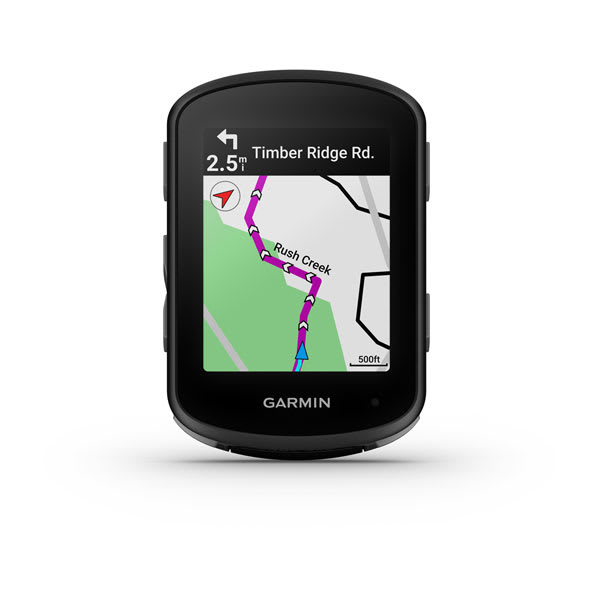
Screen and hardware
The iGPSPORT iGS800 has a 2.8” screen. The Garmin Edge 540 has a 2.6” screen. In practice the difference is noticeable but not dramatic — both are readable on the bike in daylight. The iGS800’s screen is slightly larger on a comparable physical footprint, which makes data fields marginally easier to read at a glance on switchbacks or technical sections. If screen size is your primary criterion, the iGS800 has an edge at a lower price.
Both units use MIP (Memory in Pixel) displays. MIP technology is highly readable in direct sunlight without requiring backlight — unlike standard LCD or OLED displays that wash out in bright conditions. Backlight is available on both for low-light or night riding.
The Garmin Edge 540 weighs 83g. The iGPSPORT iGS800 weighs around 95g. On a performance road build the difference matters; on a trail or gravel setup it is irrelevant.
Build quality on both units is solid. Both carry IPX7 ratings. Both survive regular wet weather, muddy trail use, and occasional drops onto soft terrain. Neither unit has widespread hardware failure complaints among users who have ridden them through multiple seasons.
Navigation and maps
Both units ship with pre-loaded offline maps and support GPX route import. The key difference is software quality.
Garmin’s routing recovers cleanly when you deviate from a planned route. It reroutes quickly and accurately. The map data Garmin uses includes trail surface classification for most regions, which means the routing is genuinely cycle-aware — it distinguishes between singletrack, gravel roads, and paved paths when calculating alternatives.
iGPSPORT’s routing handles straightforward courses well. On a pre-loaded GPX track, navigation is reliable. Where it falls behind Garmin is in dynamic rerouting — when you miss a turn or intentionally deviate, recovery is slower and sometimes prompts you back onto non-ideal routes. For riders who load a course and follow it without deviating, this is rarely an issue. For riders who explore freely, it is.
ClimbPro (Garmin, Edge 540 and up) reads the elevation profile of a loaded route and shows each climb’s gradient, remaining distance, and estimated effort in real time. The iGS800 does not have a direct equivalent. For riders who plan structured rides on known courses with significant climbing, ClimbPro is a genuinely useful feature that changes how you pace efforts.
Training metrics
This is where the gap between the two units is most significant.
Garmin Edge 540:
- VO2 max (cycling)
- Training load (acute and chronic)
- Training status (productive, maintaining, unproductive, overreaching)
- Training readiness
- HRV status (requires compatible heart rate strap)
- Race predictor
- ClimbPro 2.0
- Intensity minutes
- Daily suggested workouts based on training history
iGPSPORT iGS800:
- Training load tracking
- Power meter compatibility
- Basic heart rate zone tracking
- Cadence, speed, elevation
- No VO2 max estimate
- No HRV status
- No training readiness or race predictor
For riders who simply record rides and look at distance and elevation, the iGS800’s metric coverage is sufficient. For riders who train structured endurance or interval work and want the GPS to help manage load and readiness, the Garmin Edge 540 is meaningfully more useful.
Power meter support on the iGS800 is solid — it records power data, shows average and normalized power, and displays configurable power zones. The difference from Garmin is not in recording the data but in the depth of analysis: Garmin takes that power data and integrates it into training load, performance condition, and readiness calculations. iGPSPORT records the numbers and lets you do the analysis elsewhere.
Ecosystem and software
Garmin Connect is a mature, heavily used platform. Route import from Komoot, Strava, and RideWithGPS works reliably. Strava sync is automatic. Garmin has dedicated apps from training platforms including TrainingPeaks and Intervals.icu. Device firmware updates are regular. The mobile app is well-maintained.
iGPSPORT’s platform (iGPSPORT app plus web portal) covers the basics but is less mature. Route import works. Strava sync functions. Third-party platform integration is thinner — TrainingPeaks and Intervals.icu work through Strava’s sync rather than direct integration. Firmware updates have been regular on the iGS800, which suggests active development. The app user experience is functional but less polished than Garmin Connect.
The ecosystem gap is real but matters differently depending on how you use your GPS. If you record and analyze on external platforms (Strava, Komoot, Intervals.icu), both units serve you fine — data gets there either way. If you rely on in-device analysis and Garmin Connect’s coaching features, the Edge 540’s ecosystem is the relevant advantage.
Price and value
iGPSPORT iGS800: approximately €180-200 new. Garmin Edge 540: approximately €250 new.
The price gap is roughly €50-70 depending on retailer and timing. The used market for Garmin adds another option: a used Edge 530 (one generation older) at €130-150 gives you Garmin’s ecosystem at iGPSPORT pricing, though without the Edge 540’s newer training metrics.
The iGPSPORT vs Garmin brand comparison covers the wider brand question, including where iGPSPORT has closed the gap and where Garmin still leads. For this specific tier, the comparison holds: iGPSPORT offers real hardware value at a lower price; Garmin offers software depth that justifies the premium for certain use cases.
Real-world navigation test
The routing difference between the two units becomes clear on a ride that deviates from the planned course — intentionally or otherwise.
When you miss a turn on the Edge 540, the unit recalculates within 2-3 seconds and shows a new route to the next waypoint or the final destination. The reroute honors the cyclist profile, so it does not send you onto a motorway or a footpath-only trail. On unfamiliar terrain where you are exploring, this means you can correct mistakes without stopping.
On the iGS800, rerouting is slower and occasionally produces suboptimal results — it may route you back to the missed turn rather than continuing forward, or suggest a route that technically connects but uses a non-cycling surface. It is not unusable, but it requires more intervention. For planned-course riding (download a route, follow it), this rarely matters. For freestyle navigation in new areas, it is a frustration point.
Both units handle pre-loaded GPX files correctly — this is the primary mode most trail and gravel riders use, and both perform it well. The navigation advantage for Garmin is primarily in the dynamic rerouting quality.
Garmin Connect vs iGPSPORT app
Garmin Connect has been in development since the mid-2000s. The mobile app handles ride history, performance metrics, training load over time, health data from compatible wearables, and course planning. The interface is not minimal, but it is logically organized and well-documented. For data-focused riders, the training load calendar, body battery integration (when paired with a Garmin watch), and race predictor are genuinely useful long-term analysis tools.
Strava sync, TrainingPeaks sync, and Intervals.icu sync are all first-class integrations — data appears on third-party platforms within minutes of ride completion. Course creation in Garmin Connect is reasonable, though most riders prefer Komoot or RideWithGPS for course planning and then push routes to the device.
iGPSPORT’s ecosystem consists of the iGPSPORT mobile app and the web portal. The app handles ride uploads, device firmware updates, and basic training history. It is functional and improving with each firmware release. Third-party platform sync works through Strava export. A direct TrainingPeaks integration exists but is less reliable than Garmin’s. Komoot integration works via GPX export from Komoot and manual file transfer — less automated than Garmin’s Komoot push.
The practical impact: if you spend time in the Garmin Connect app analyzing training load and reviewing performance trends, you will notice the app quality difference. If you upload rides to Strava and do your analysis there, both units serve the same purpose with roughly equal convenience.
Sensor ecosystem
Both units support ANT+ and Bluetooth dual-band for sensors. In practice, this means:
- Heart rate straps: any ANT+ or Bluetooth HR strap works with both
- Power meters: both support dual-sided and single-sided ANT+ and Bluetooth power meters
- Cadence and speed sensors: compatible across both brands
- Garmin Vector/Rally pedals: record correctly on both (ANT+)
- Shimano Di2 and SRAM eTap: ANT+ data on both for electronic shifting status
- Smart trainers: primarily paired through the mobile app for planned workouts, not directly relevant for outdoor rides
The sensor compatibility gap in 2025 is effectively closed for standard sensors. The difference is in how that sensor data is processed and displayed — Garmin’s training load algorithm uses power data in more sophisticated ways than iGPSPORT’s current implementation.
Firmware and long-term support
Garmin has a long track record of maintaining older devices. The Edge 530 (2019) still receives firmware updates in 2025. This matters for buyers who intend to keep a unit for 4-6 years — you are not buying a product that will be abandoned in two years.
iGPSPORT’s iGS800 has received regular firmware updates since its 2022 release. The update history is solid but shorter — the brand has been in the premium cycling GPS market for fewer years. Whether this continues over a 4-6 year ownership window is unknown.
For a buyer who plans to replace the unit in 2-3 years regardless, this is a less relevant factor. For someone who wants the device to stay current for half a decade, Garmin’s proven track record is a legitimate data point.
Who buys which
Choose the Garmin Edge 540 if:
- You train with heart rate or power and want the GPS to help manage your training load
- You regularly ride unfamiliar terrain and rely on dynamic rerouting
- You use Garmin Connect’s coaching features or care about HRV status and training readiness
- You want ClimbPro on planned rides with significant elevation profiles
- Long-term software support matters to you — Garmin has a stronger track record for sustained firmware updates
Choose the iGPSPORT iGS800 if:
- You ride primarily for recreation and do not actively track training load or intervals
- The larger screen matters for your setup — mapping, aging eyes, or complex data layouts
- You load GPX routes from Komoot or Strava and follow them without frequent deviations
- You want to spend €50-70 less and put the savings toward something else
- You are upgrading from a basic unit and do not yet know which training features you’ll actually use
There is a reasonable middle path: buy the iGS800, ride it for a season, and decide if you need the extra metrics before investing in a Garmin. The iGS800 is good enough that it will not frustrate you, and the upgrade question becomes easier to answer with real experience than without it.
Verdict
The Garmin Edge 540 is the better GPS computer for riders who actively use training metrics, plan courses with complex navigation, or want the most mature ecosystem in the market. It earns its €50-70 premium specifically through software depth.
The iGPSPORT iGS800 is a genuinely capable mid-range unit that competes on screen size and price. For casual to moderately serious riders who prioritize value over metrics, it delivers.
Neither choice is wrong at these prices. The decision should come from an honest look at what features you will actually use — not what sounds useful in a spec list.


Deja un comentario