
Best GPS Computer for Mountain Biking 2025
The GPS computer market in 2025 offers a wide spread: from €80 units that track speed and distance to €500 flagship devices with solar charging and advanced training analytics. Most MTB riders sit somewhere in the middle, and figuring out which tier makes sense requires a clear-eyed look at what you actually use on the trail.
This is a practical breakdown by budget, not a feature specification list. The goal is to help you decide where to spend — or where not to — based on how you ride.

Under €100: the essentials tier
At this price, the options are limited but the value is real. The iGPSPORT BSC300T is the unit to look at. It covers speed, distance, elevation, cadence and heart rate sensor pairing, and basic breadcrumb navigation. No full routing maps, but you can load a GPX file and follow the track. The screen is small but readable. Battery runs to around 30 hours.
For riders who primarily ride familiar trails and want to track stats without spending Garmin money, the BSC300T is a strong answer. The iGPSPORT BSC300T review covers it in full detail.
What you give up at this tier: full maps, turn-by-turn navigation, ClimbPro-style climb planning, and training load analytics. For most weekend trail riders, none of that is a daily need.
Best pick under €100: iGPSPORT BSC300T. Pairs with ANT+ and Bluetooth sensors, survives mud and rain (IPX7), and does its job without demanding your attention on technical descents.
€130-180: the navigation tier
This is where riding unfamiliar trails becomes practical. The iGPSPORT iGS630 adds a 2.2” color screen, full offline maps, and turn-by-turn navigation over the BSC300T at about €130-150. You can download trail maps, import GPX routes from Komoot or Strava, and follow a line across unfamiliar terrain.
Garmin’s equivalent in this range would be a used Edge 530 or Edge 820. The Edge 530 is a strong unit with better software maturity and ecosystem, but at €130 or less used, it is competing on price against a new iGPSPORT. The software gap is real — Garmin’s routing and map quality are better — but for casual trail use, the iGS630’s maps are functional. The iGPSPORT iGS630 review covers where that gap shows.
Best pick €130-180: iGPSPORT iGS630 new, or a used Garmin Edge 530 if you find one in good condition at this price. The iGS630 is the safer new-purchase recommendation; the used Garmin offers better software if the condition is right.
€200-280: the mid-range sweet spot
The iGPSPORT iGS800 lands at around €200 and offers a 2.8” color screen, improved navigation, and training metrics including power meter support and training load tracking. It is the most capable iGPSPORT before you reach flagship territory, and it competes directly with entry Garmin pricing.
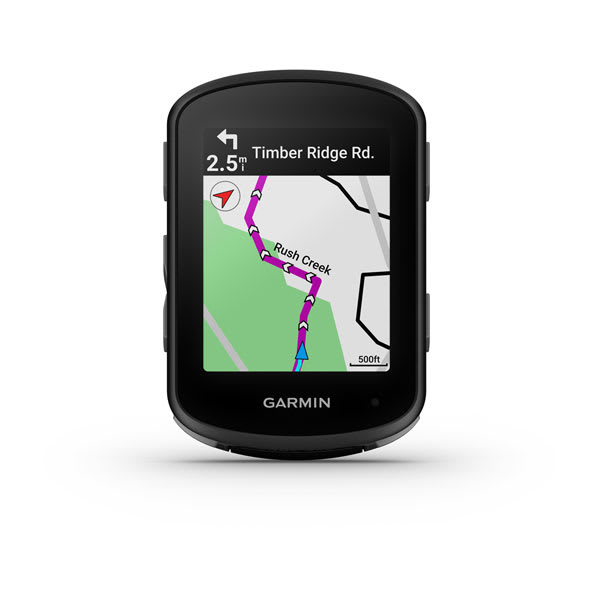
The Garmin Edge 540 costs roughly €250 and brings significantly better software: ClimbPro 2.0, advanced training metrics (VO2 max, training readiness, HRV status), race predictor, and Garmin’s more mature routing engine. For riders who train with heart rate or power data and want the GPS to analyze that data intelligently, the Edge 540 earns its premium. The Garmin Edge 540 review explains why this mid-range Garmin is the most commonly recommended cycling GPS.
The Wahoo Elemnt Bolt V2 (~€280) takes a different approach: minimal display, fast phone pairing, and arguably the best Strava and third-party platform integration in this tier. It lacks on-device training analytics, which makes it less useful if you want the GPS to do your training analysis. For riders who export data to external platforms and want the simplest device possible, it is worth considering. The Wahoo Elemnt Bolt review has the full breakdown.
Best pick €200-280: Garmin Edge 540 for riders who want training metrics and ClimbPro on trails with elevation. iGPSPORT iGS800 if you need a larger screen at a lower price. Wahoo Elemnt Bolt V2 if you prefer a minimal device and do your analysis in Strava.
Over €300: where diminishing returns set in
The Garmin Edge 840 (~€300) adds a 3.5” display and two new metrics — hill score and endurance score — over the Edge 540. The larger screen is the main reason to choose it over the 540, particularly for navigation-heavy riding or for older riders who find small displays harder to read mid-descent. The Garmin Edge 840 review makes the case for when it is and is not worth the step up.
Above €350, you are in Garmin Edge 1040 territory — an open-platform unit with solar charging and the largest screen in the lineup. For long-distance riding or bikepacking where you cannot charge mid-trip, the solar version makes sense. For regular MTB riding, it is overkill. The Garmin Edge 1040 vs Wahoo Elemnt Roam V2 comparison is the right read if you are seriously considering this tier.
Best pick over €300: Garmin Edge 840 if screen size is the deciding factor. Edge 1040 only for bikepacking and events where multi-day battery matters.
Features that matter specifically for MTB
Trail maps and routing. Road maps are not enough for technical trails. The GPS units at €130 and above offer offline trail maps that include singletrack, doubletrack, and fire roads. Garmin’s maps include trail surface data for many regions; iGPSPORT’s maps are functional for following tracks but less detailed on trail classification.
Segment and activity recording accuracy. MTB involves rapid direction changes, switchbacks, and descents through tree cover. All modern GPS units handle this better than they did five years ago, but there is still variation. Garmin’s processing algorithms handle dense forest and rapid switchbacks slightly better than iGPSPORT in comparative tests, which matters for accurate elevation and track matching.
Mounting security. On a mountain bike, the GPS mount takes more vibration than on a road bike. Quarter-turn mounts (Garmin’s standard and compatible iGPSPORT mounts) are reliable at trail speeds. Out-front mounts that position the GPS ahead of the stem give better visibility. If you run a dropper post and prefer a clean cockpit, consider a stem-top mount over a handlebar mount.
Incident detection. Garmin Edge 540 and above include incident detection that triggers a LiveTrack notification if it detects a crash. This is genuinely useful for solo riding in remote terrain where help might not arrive quickly otherwise.
Battery life. A 30-hour GPS battery covers even the longest single-day trail rides. If you do multi-day routes, the iGPSPORT BSC300T and Garmin Edge 840 Solar both offer extended range. Most riders on day rides will not hit the battery limit on any current unit.
Mounting systems and accessories
How you mount a GPS computer affects usability more than most product reviews mention.
Quarter-turn mounts (Garmin standard): The most common format. The unit rotates 90 degrees to lock and unlock. Garmin’s own mounts and compatible third-party options (K-Edge, Barfly, TwoNav) all work. Quarter-turn mounts are reliable at trail speeds but require two hands to remove — intentional security rather than a flaw.
Proprietary mounts: Wahoo Elemnt units use a proprietary magnetic-plus-lock system that allows one-hand removal. iGPSPORT units typically ship with a quarter-turn compatible mount but also have models with proprietary options. For everyday riding, the proprietary system is more convenient; for racing where you want nothing to accidentally detach, the quarter-turn lock is preferable.
Out-front vs stem-top: Out-front mounts place the GPS ahead of the stem, giving a lower eyeline when looking at the unit. This reduces the head-drop needed to check stats mid-ride. On technical trails where every moment of attention matters, this is a meaningful ergonomic advantage. Stem-top mounts are simpler and cheaper but put the unit slightly farther back and higher.
MTB-specific vibration concerns. A quarter-turn mount is rated for the vibration levels of trail riding. A cheap clamp-style mount (the kind included with some budget units) can work loose over rough terrain. For regular MTB use, invest in a quality mount — €15-25 for a K-Edge or Garmin out-front is worth it versus replacing a GPS that fell off at 40 km/h on a descent.
Trail apps and route planning
Every GPS on this list integrates with the main cycling route platforms:
Komoot: Free to use for a set of maps, with regional packs available for purchase. Komoot generates bike-specific routing that respects trail types. For MTB, it handles singletrack and doubletrack correctly when you set the profile to mountain biking. Komoot routes transfer to Garmin devices via the Garmin Connect app. For iGPSPORT, Komoot exports a GPX that you copy to the device — less seamless but functional.
Strava: Route planning in Strava generates segments and starred points-of-interest automatically. For Strava-centric riders, sending a route to a Garmin unit works with one tap in the app. iGPSPORT’s Strava integration exports completed rides but does not offer the same seamless route-push that Garmin provides.
RideWithGPS: Particularly popular for bikepacking and touring. Cue sheet navigation (text turn-by-turn) is a RideWithGPS strength. Both Garmin and iGPSPORT can import RideWithGPS GPX files.
The practical difference between platforms for most MTB riders: if you use Komoot regularly, a Garmin’s Komoot integration is noticeably smoother than iGPSPORT’s. If you simply export GPX files from Wikiloc or other trail-specific apps, both brands handle imports equally.
eMTB-specific considerations
The GPS considerations for eMTB riders have some unique angles compared to standard MTB:
Motor data. GPS computers do not directly read motor assist levels or battery percentage from the motor unit — that data stays on the bike’s head unit (Bosch, Shimano, Fazua, etc.). However, GPS computers do record the ride’s power output when paired with a power meter or compatible crank, which gives you efficiency data even without motor integration.
Ride duration vs battery. eMTB battery life and GPS battery life converge differently. An eMTB on full-assist mode might exhaust its bike battery in 3-4 hours; the GPS battery will outlast many bike batteries by a wide margin. This is a non-issue for trail riding but worth noting on multi-day routes where you’re charging both devices.
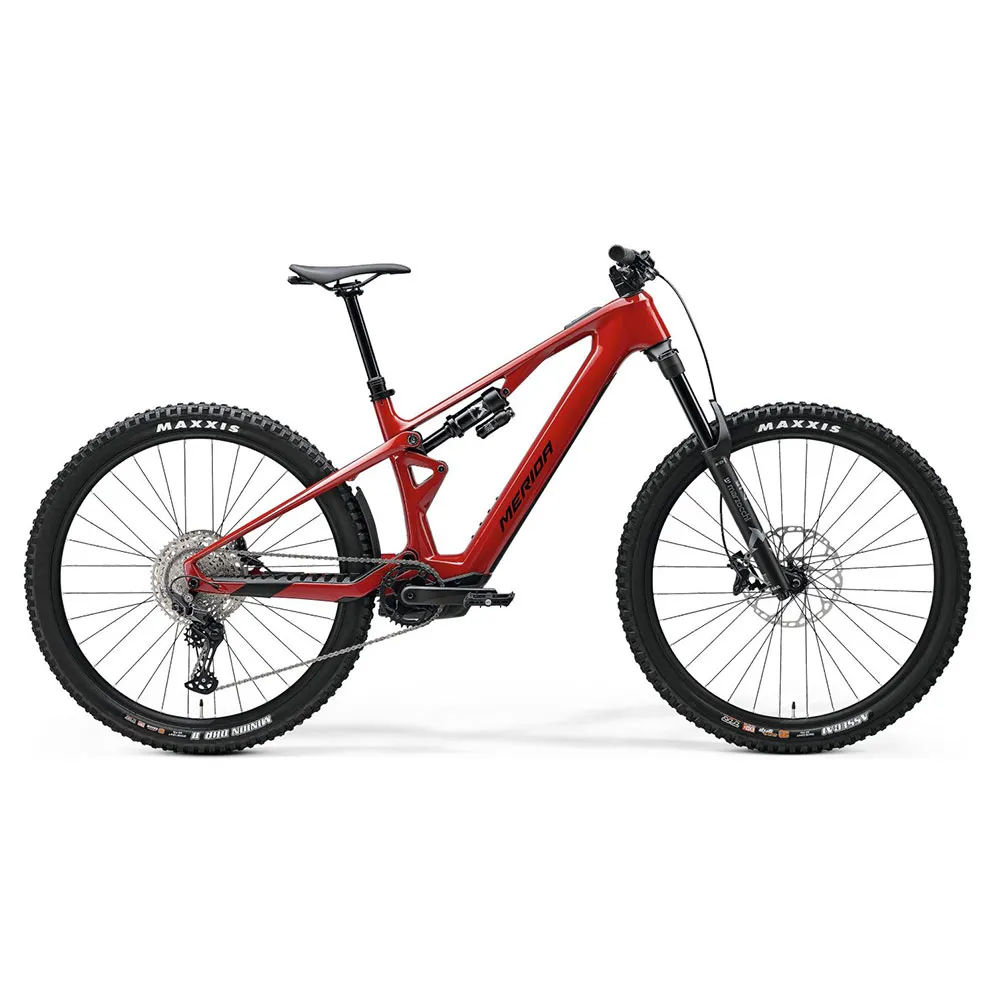
Weight. The GPS weight premium (from BSC300T at ~35g to Edge 840 at ~104g) is irrelevant on an eMTB that weighs 21-24 kg. Size and screen readability matter more on an eMTB where you’re often moving faster and checking data less frequently mid-trail.
Vibration damping. Full-power eMTBs on descents generate significant handlebar vibration through the motor. Quality mounts handle this, but a GPS secured in a loose or cheap mount can rattle enough to be distracting. Use the same mount quality guidance as for regular MTB — a good out-front mount at €15-25 is reliable; a rubber band holder is not.
For a deeper look at eMTB-specific tech decisions, the new eMTB first steps and maintenance guide covers equipment choices beyond just GPS.
GPS accuracy on MTB trails
All units on this list use a combination of GPS, GLONASS, and Galileo satellite systems, which provides better signal acquisition in tree cover and terrain shadows than single-system GPS alone. In practice, accuracy on standard MTB trails in European forests is adequate on all units — tracks log correctly, elevation gain records within 3-5% of verified totals on a well-maintained barometric altimeter.
Where you see divergence: dense conifer forest with very high tree canopy, deep gorges, and rapid switchbacks. Garmin’s filtering algorithms handle these scenarios slightly better in practice — the track logs a cleaner line through tight turns and recovers faster from brief signal loss. iGPSPORT units can show minor jagged artifacts on tracks in these conditions that inflate recorded distance slightly.
For route following, the accuracy question matters less than for track recording: both units will navigate correctly even if the logged track has some minor noise.
The phone question
A smartphone does record GPX tracks, it does show maps, and it does connect to Bluetooth sensors. The problem for MTB is threefold:
Physical security. A €100 dedicated GPS unit falling off the bars is €100 lost. A €800 phone falling at the same point is both expensive and strands you without a communication device.
Battery drain. Trail riding with GPS tracking active, screen on, and map rendering running drains a smartphone battery fast — often faster than the ride itself on longer outings.
Screen usability. A touchscreen in rain or with muddy gloves is unreliable. Dedicated GPS units use physical buttons that work wet.
If you are deciding between a phone and a budget GPS, the budget GPS wins for regular trail riding. The do you need a bike computer or phone guide covers this comparison in more detail.
Sensors worth pairing with a cycling GPS
A GPS computer is more useful when paired with additional sensors. None are required, but they change what data you can act on.
Heart rate strap (~€40-80 ANT+ chest strap): The most consistently useful add-on for any GPS. Records effort level in real time, lets you pace climbs by zone, and gives the GPS what it needs to calculate training load. Wrist HR from a watch is an alternative but less accurate during interval efforts and technical riding where arm movement affects readings.
Cadence sensor (~€15-25): A small magnet-and-sensor on the crank or wheel. Tracks pedal revolutions per minute, which guides technique and pacing on climbs. Available from Garmin, Wahoo, and budget brands — the sensor data is universally compatible across all GPS units on this list.
Speed sensor (~€15-25): Optional if you use GPS speed (accurate in open terrain). Useful in environments where GPS reception drops temporarily — in tunnels, deep gorges, or under dense forest canopy — to maintain accurate speed recording.
Power meter (€250-800+): The highest-information sensor and also the most expensive. Records output in watts, which is the most objective measure of effort. For training-focused riders who manage structured intervals and want the GPS to calculate FTP, training load, and intensity minutes, a power meter transforms the unit’s analytical capabilities. At this price, the investment is only justified if you actively train by power — not just curiosity.
Sensor compatibility is universal across ANT+ and Bluetooth protocols. Any of the above sensors works with BSC300T, iGS630, iGS800, Edge 540, Edge 840, and Wahoo Elemnt Bolt V2 without brand-matching.
Recording settings: every second vs smart recording
Most cycling GPS units offer two recording modes:
Smart recording logs a data point when values change meaningfully — every few seconds on constant roads, more frequently on technical terrain or intervals. File sizes are smaller and battery impact is lower. For casual use, smart recording is fine.
Every-second recording creates a data point at a fixed 1-second interval. Files are larger but provide more detail for elevation profiles, power analysis, and Strava segment matching. If you care about Strava segment leaderboards, every-second recording gives the most accurate split times and prevents edge cases where a segment start or end falls between recorded points.
For Strava KOM attempts, set to every-second recording before a target segment ride. For normal training rides, smart recording is sufficient.
How to extend GPS life on long days
For rides under 12 hours, battery is not a factor on any current GPS. For events over 20 hours — multi-day rides, bikepacking overnights, ultra-endurance events — plan accordingly:
- The standard Edge 840 lasts up to 26 hours; the Solar version adds meaningful extension on sunny days
- The BSC300T claims 30 hours, which real-world tests generally confirm in standard GPS mode
- A 10,000 mAh power bank adds 2-4 full charges to any unit via USB-C
- Charge while riding: run a cable from the power bank in a jersey pocket or frame bag to the GPS port; most units record normally while charging
For most rides, the built-in battery is more than enough. The 26-30 hour range covers any single-day event.
How to choose
Pick your tier based on how you actually ride, not how you imagine you might ride:
- You ride familiar local trails, care about stats, and want to leave your phone in the bag: BSC300T. Simple, cheap, proven.
- You explore unfamiliar routes, download GPX files from Komoot or Strava, and want reliable breadcrumb navigation: iGS630 or used Garmin Edge 530.
- You train with heart rate or power data and want the device to analyze that data: Garmin Edge 540. The mid-range Garmin is the best single choice at this use case.
- You do extended rides or bikepacking where navigation accuracy in complex terrain matters: Garmin Edge 840 or Edge 1040.
- You keep things simple and do your analysis externally on Strava or TrainingPeaks: Wahoo Elemnt Bolt V2. The least friction device in the market.
The brand question — Garmin vs iGPSPORT — is worth understanding separately. The rise of iGPSPORT explains where iGPSPORT now genuinely competes and where Garmin’s software and ecosystem still pull ahead.
For most MTB riders doing typical weekend trail riding, the Garmin Edge 540 is the clearest all-around recommendation in 2025. The iGPSPORT BSC300T is the right pick if you want the basics without the premium, and the Edge 840 earns its step-up if screen size is a genuine priority on your setup.
If you are uncertain about which tier suits you, consider starting at one tier below what you think you need. The BSC300T will tell you quickly if you want better maps; the iGS630 will tell you if you need training metrics. Upgrading when you hit a specific wall you want to move past is a better decision process than speculating in a product listing.
For the broader question of whether you even need a dedicated GPS unit or whether a phone is adequate, the do you need a bike computer or phone comparison covers the trade-offs in detail. And if you are trying to understand how much the GPS brand matters — whether iGPSPORT is genuinely competitive with Garmin at each tier — the iGPSPORT vs Garmin brand analysis is the place to start.


Deja un comentario